


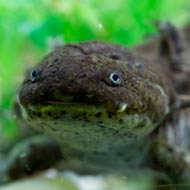
Critically endangered axolotl arrive in Edinburgh
A pair of critically endangered axolotl recently arrived at Edinburgh Zoo, where it is hoped they will form part of a breeding programme to help save the species.
The species was listed as 'critically endangered' five years ago, but more recent data suggests they may actually be extinct in the wild. A four-month search in 2013 failed to find any wild axolotl.
"Axolotl populations are diminishing at an alarming rate due to a number of factors," said Gareth Bennett, the zoo's senior presenter.
Among these is the increasing urbanisation of Mexico, causing a rise in water pollution and draining of the amphibians' natural habitat.
"These fascinating creatures have also been used extensively in scientific research because of their ability to regenerate limbs," Mr Bennett added. "They are probably one of the most scientifically studied salamanders in the world."
In the past, Edinburgh Zoo has successfully managed to breed this species, which is also known as the 'Mexican salamander' or 'Mexican walking fish'. It is hoped further successes will be seen with the new arrivals.
Axolotl are found only in Lake Xochimilco near Mexico City. It is unusual among amphibians as it reaches adulthood without metamorphosing and taking to land. Instead it remains gilled, preferring to live out its life in water.
The pair of axolotl arrived at Edinburgh Zoo in July but remained off show until they had settled in. They are now on display in the aquariums.
Image courtesy of RZSS Edinburgh Zoo


 Companies marketing medicines for small pets exempt from authorisation must submit their annual return to the Veterinary Medicines Directorate (VMD) by 30 November 2026.



