


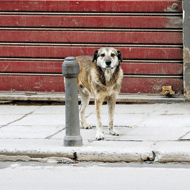
Funds will be used to pilot a sterilisation campaign
A crowdfunding campaign has been launched by the Worldwide Veterinary Service (WVS) to help tackle the killing of street dogs in Armenia.
The charity say that the money will be used to pilot a sterilisation campaign in Yerevan, Armenia's capital city, which will reduce the number of street dogs and make sure that others do not settle in the area.
Street dogs are killed in Yerevan because locals are scared of them and do not want them living on their streets. For many years dogs were shot in cold blood, but nowadays they are caught and transported to a clinic where they are euthanised. Although some are steralised, these dogs are never released and are transported to a location outside of the city.
The WVS say that the only effective way to control the number of dogs living on the streets is to catch them, sterilise them and then release the back to the same location where they were picked up (CNR, catch-neuter-release).
Campaign organiser Owen Evans from WVS said: "Dogs are very territorial they will not easily let any new dogs into ‘their’ street. That is the reason why this concept is working, as sterilised and vaccinated dogs in a street ensure that the number of dogs doesn’t increase, and at the same time that no other dogs are settle in their area.
"When dogs are killed a new power vacuum for new dogs is created, which gets filled with dogs who are neither sterilised nor vaccinated.
"On top of improving animal welfare, sterilised dogs are healthier animals. These dogs also cause fewer complaints, as neutered dogs are not chase bitches in heat and do not fight as much, causing less nuisance by barking and chasing each other through the streets at night."
WVS is working on an agreement with the municipality to be able to prove that CNR is effective and plans to send the first team of vets and nurses in November.
To make the project work, WVS will work with the animal welfare charity Pro Paws. Based in Armenia, Pro Paws have long fought against the killing of street dogs in the city and aim to promote humane behaviour towards stray and unwanted dogs by educating the public about dog welfare in general.
Pro Paws will roll out educational material to the public as soon as possible to make everybody understand that WVS will not take the dogs away, but they will be taken back to the same place they were caught.
The WVS aim to raise $10,000 USD and at the time of publication the campaign had reached $542.00.
To make a donation, please visit https://life.indiegogo.com/fundraisers/saving-armenian-street-dogs


 Eligible members of BEVA will be able to vote for their Council team until Monday, 17 August 2026. Members will have received an election email on 17 July.



