


Bees are the best pollinators, study finds
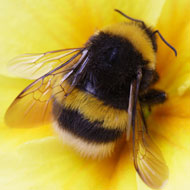
The researchers warn against focussing on bees as the solution to conservation and biodiversity concerns.
Bees top the charts for pollination success, according to new research by the University of Bristol and the University of St Andrews.
The study, published in Proceedings of the Royal Society B, is the first of its kind to examine insect functionality within pollination networks. In it, the scientists measured visits and pollen deposition to all flower species on a heathland in Dorset.
The approach enabled the researchers to develop pollinator importance networks. These not only reveal that bumblebees the main flower visitors to the site, but that they are also the most successful potential pollinators. Honeybees and solitary bees were also among the top-performers.
Lead author Dr Gavin Ballantyne of the University of St Andrews’ School of Biology said: “Vital crops such as oilseed rape, apples and strawberries, as well as thousands of wild plants, all require pollination by a wide range of animal pollinators which can be visualised as a network of interacting species. However, the structure and stability of these wider networks are not fully understood and the plant and insect species involved may often be under threat.
“Understanding how pollinator importance networks, like those we studied on Dorset heathland, are structured is crucial to understanding community interactions and thus how to restore and conserve pollination services in the face of pollinator decline.”
Co-author Dr Katherine Baldock from the University of Bristol's School of Biological Sciences, adds: “This study represents an important step forward in how we understand the relationships among plants and their pollinators. Including information on the pollinating efficiency of animals that visit flowers in network studies will lead to a greater understanding of how these complex communities are structured and which species are important pollinators of crops and wild flowers.”
The researchers warn against focussing on bees as the solution to conservation and biodiversity concerns. Although they deposited the greatest amount of pollen, deposition rates were highly variable and many visitor groups had an important role to play. Therefore, in order for food production and biodiversity to remain stable, the researchers say that more attention must be given to a wider network of insects.


 Companies marketing medicines for small pets exempt from authorisation must submit their annual return to the Veterinary Medicines Directorate (VMD) by 30 November 2026.



