


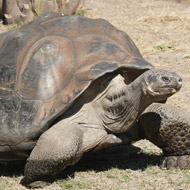
Galapagos tortoises harbour unique parasite communities
Galapagos tortoises may host groups of parasitic worms unique to each tortoise species and island, according to new research.
A study, published in Plos One, describes an investigation into wild giant tortoises of the Galapagos and their parasitic worms, and examines how this relationship can inform conservation management.
In the study, a team of researchers studied faecal samples from endangered Galapagos giant tortoises. They used the diverse range of eggs produced by different species of parasitic worms living in the tortoises' intestines as an indicator of parasite diversity.
The variety of eggs varied between islands and tortoise species, suggesting that each harbours a unique parasite community. While all the Galapagos species share a common ancestor, the findings imply that tortoises and parasites co-evolved as they populated various islands around the Galapagos.
As a result of the study, the scientists recommend that Galapagos tortoise conservation breeding programmes maintain these unique parasite communities.
More generally, they suggest that conservation programmes worldwide take parasite community structure into consideration when conserving their hosts to avoid important implications for the short-term health and long-term evolution of the species.
The paper is a collaborative study between the Zoological Society of London, the Royal Veterinary College, the University of Leeds, the University of Guayaquil and the Galapagos National Park.
Image (C) Wikimedia/Matthew Field


 Companies marketing medicines for small pets exempt from authorisation must submit their annual return to the Veterinary Medicines Directorate (VMD) by 30 November 2026.



