


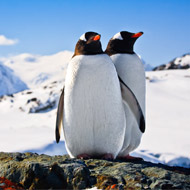
Plastic ingestion can have serious health implications
Plastic ingestion will affect almost all of the world's seabirds by 2050, according to new research.
A study, published in Proceedings of the National Academy of Sciences, reveals that nearly 60 per cent of all seabird species have plastic in their gut and, based on current trends, scientists estimate this figure will rise to 99 per cent by 2050.
In the study, researchers from CSIRO and Imperial College London assessed how widespread the threat of plastic is for seabirds, including albatrosses, shearwaters and penguins.
Based on analysis of published studies in the early 1960s, they found that that plastic is increasingly common in seabird's stomachs.
In 1960, plastic was found in the gut of less than five per cent of individual seabirds, which increased to 80 per cent by 2010.
The scientists believe that 90 per cent of all seabirds alive today have eaten some kind of plastic including bags, bottle caps and plastic fibres from synthetic clothes.
The birds mistake the brightly coloured items for food or swallow them accidentally. Plastic ingestion can cause gut impaction, weightless and can sometimes be fatal.
Senior research scientist at CSIRO Oceans and Atmosphere Dr Wilcox said: "For the first time, we have a global prediction of how wide-reaching plastic impacts may be on marine species - and the results are striking.
"We predict, using historical observations, that 90 per cent of individual seabirds have eaten plastic. This is a huge amount and really points to the ubiquity of plastic pollution."
The study found plastics have the greatest impact on wildlife where they gather in the Southern ocean, around the edges of Australia, outer Africa and South America.
Dr Erik van Sebille from the Grantham Institute at Imperial College London said the plastics had the most devastating impact in the areas where there was the greatest diversity of species.
"We are very concerned about species such as penguins and giant albatrosses, which live in these areas," said Dr Sebille. "While the infamous garbage patches in the middle of the oceans have strikingly high densities of plastic, very few animals live here."
The researchers believe that there is still a chance to change the impact that plastic has on seabirds. Dr Denise Hardesty, also from CSIRO Oceans and Atmosphere, added: "Improving waste management can reduce the threat plastic is posing to marine wildlife.
"Even simple measures can make a difference, such as reducing packaging, banning single-use plastic items or charging an extra fee to use them, and introducing deposits for recyclable items like drink containers.
"Efforts to reduce plastics losses into the environment in Europe resulted in measurable changes in plastic in seabird stomachs with less than a decade, which suggests that improvements in basic waste management can reduce plastic in the environment in a really short time."


 Companies marketing medicines for small pets exempt from authorisation must submit their annual return to the Veterinary Medicines Directorate (VMD) by 30 November 2026.



