


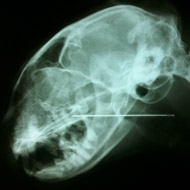
Kittens more likely to ingest foreign bodies
We all know that dogs consume anything and everything. However, a leading cat charity has found that many vets have treated cats which have eaten something they shouldn't.
A survey carried out by International Cat Care has revealed that some of the most common culprits are needles and threads, string (particularly from around joints of meat), rubber bands, coins, balloons, bones and foil.
Other more unusual items reported include a SIM card, hair from an owner's wig, and earplugs. In many of the reported cases, surgery was required to remove the items in order to prevent further illness.
Now, as part of their 'Keeping Cats Safe' campaign, International Cat Care are on a mission to highlight the severe dangers to cats caused by ingesting 'foreign bodies'.
"If owners suspect that their cat has ingested something it shouldn’t have, they should consult their vet and not assume things will ‘pass through’ safely, as they often don’t, becoming lodged and causing severe illness, " said an International Cat Care spokesperson.
They add: "Signs that the object may be causing a problem include refusing food, lethargy, retching and vomiting. However cats are also masters of hiding illness so they may just seem to sleep more and be less keen to play rather than crying or showing other more obvious signs of pain or discomfort.
"Whatever the signs (or lack of), if an owner suspects that their cat has eaten something it shouldn’t, they should seek immediate veterinary advice."
The survey revealed that owners of kittens should be especially aware of the dangers. Vets reported that young cats were more likely to ingest foreign bodies, presumably because they are more curious and playful than older cats.
Owners of pedigree cats should also be on the lookout for dangers as many suffer from 'pica' (the consumption on non-edible materials), showing behaviours such as wool eating which may require treatment from a behaviourist.
Furthermore, cats kept solely indoors may also be likely to eat things they shouldn't, and owners of indoor cats should make extra effort to keep their cats entertained to avoid boredom - or frustration-related chewing.
For more information about foreign bodies in cats see: http://icatcare.org/advice/keeping-cats-safe/foreign-bodies.
Image (C) International Cat Care


 Eligible members of BEVA will be able to vote for their Council team until Monday, 17 August 2026. Members will have received an election email on 17 July.



