


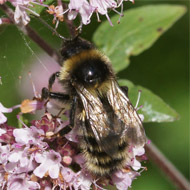
Consistent sightings of extinct species in Dungeness
A project to reintroduce short-haired bumblebees back into the UK is proving to be a success, according to conservationists.
In a first for the project, three short-haired bumblebees have been spotted on four consecutive days on RSPB's Dungeness reserve in Kent.
Declared extinct in the UK in 2000, short-haired bumblebees were wiped out almost certainly to the loss of 97 per cent ancient wild flower meadows on which they depend. They were last recorded in Dungeness in 1988.
Every year since 2012, around 50 queen bees from Sweden have been released on the Dungeness reserve as part of a pioneering project led by the Bumblebee Conservation Trust, RSPB and Natural England and Hymettus.
Consistent sightings of worker bees at the site over the last three years show that the queens have been successful in nesting and have produced young - a strong indication that the bees are finding sufficient food to build colonies.
"This is a thrilling discovery and shows that conservation for bumblebees really can work," said project manager Dr Nikki Gammans.
"Populations of at least three other rare bumblebees are now found in locations across the release zone not recorded in for over 10 years and their abundance is increasing across south Kent and East Sussex."
The project has been backed by over 100 landowners as well as the the local community in the Dungeness and Romney Marsh area of south-east England.
Thanks to farmers and conservation groups, around 1,000 hectares of flower-rich habitats are being managed for the bees, helping several other rare bumblebee species and other pollinators.
Image (C) Martin Andersson


 Companies marketing medicines for small pets exempt from authorisation must submit their annual return to the Veterinary Medicines Directorate (VMD) by 30 November 2026.



