


Strong opposition to surveillance centre closure
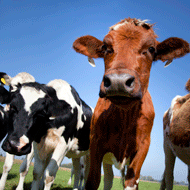
Respondents felt that the retention of the facility was important 'insurance' for livestock health in the area.
The suggestion to close a veterinary disease surveillance centre in Inverness has been strongly opposed.
Scotland's Rural College (SRUC) opened a six week consultation in June seeking the views of stakeholders on the provision of veterinary surveillance in Scotland.
As part of that consultation, views were sought on the planned closure of a Scottish surveillance centre in Inverness which carries out post mortem examinations on dead livestock.
Proposed alternatives to the closure include training and supporting veterinary practitioners to carry out post mortem examinations on farm, carcase transportation to surveillance centres in Thurso, Aberdeen and Perth, and building a new PM only facility.
In a report, SRUC said that there was 'strong opposition' to the closure of the centre, declaring that 'there was a widespread belief that loss of the service would have a damaging impact on the viability of livestock farming in the regions'.
Respondents accepted that the resource was under-used, but felt that the retention of the facility was important 'insurance' for livestock health in the area.
In a letter signed by 20 private vets working in practices in the Highlands, it was stated that "as a group we have decided that we are not prepared to carry out on-farm post mortem examinations for the purpose of disease surveillance.
"This decision is based on concerns regarding accurate diagnosis, lack of competence and experience, cost to the client, inadequate facilities, health and safety issues and professional indemnity".
Another vet commented on lack of capacity among farm animal vets working in the Highlands to undertake more work such as post-mortem examinations.
The results of the consultation were discussed in a meeting of the strategic Management Board and the Scottish Government held on 23 July.
The next steps in finalising any changes to the surveillance network include the submission of recommendations to the Cabinet Secretary for Rural Affairs, Food and Environment by the Strategic Management Board. Final decisions are dependent on the outcome of these discussions and will be made in public due course.
The full report and responses can be found at: http://www.sruc.ac.uk/diseasesurveillanceconsultation


 Companies marketing medicines for small pets exempt from authorisation must submit their annual return to the Veterinary Medicines Directorate (VMD) by 30 November 2026.



