


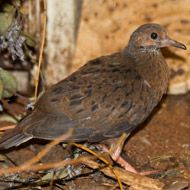
Socorro doves are extinct in the wild
Edinburgh Zoo has hailed the arrival of an incredibly rare dove which has been extinct in the wild since the early 1970s.
With less than 100 pure bred individuals left in the world, bird experts at the zoo were delighted to witness a Socorro dove chick hatch on the 9 July, before taking flight and fledging 14 days later.
The chick is the first to arrive from a new breeding pair sent to the zoo as part of the overarching European Endangered Species Programme. The programme has successfully bred Socorro birds since 2005 and raised an incredible 12 chicks to date.
Furthermore, in 2008 Edinburgh and Paignton Zoo collectively sent 12 Socorro doves to Albuquerque Zoo in the USA to form a satellite breeding group amongst North American collections.
In 2013, several birds were then transferred from Albuquerque to a safari park in Mexico, and the following year saw the first Socorro dove chicks hatch in Mexico for almost 40 years.
It is hoped that these birds will provide offspring to be reintroduced to their native habitat on the island of Sorocco, Mexico, in the near future.
Bird team leader Colin Oulton said: "It is incredibly sad to think that this species is now extinct in the wild and only around 100 exist in captivity. The hatching of this bird highlights the significant role zoos play in conserving species and helping to increase population numbers of rare animals.
"Due to coordinated breeding programmes with zoos across the world, this species has been saved and we are able to increase the numbers and hopefully reintroduce them back into their native habitat."
The Socorro dove was endemic to Socorro Island, which is around 600km off the west coast of Mexico. However, the introduction of sheep that ate plants that the doves relied on for food and shelter, as well as cats that preyed on the birds, is thought to have caused their decline.
Work is currently taking place on Socorro Island to ensure it is suitable for the future reintroduction of the doves.
Image (C) RZSS Edinburgh Zoo


 Companies marketing medicines for small pets exempt from authorisation must submit their annual return to the Veterinary Medicines Directorate (VMD) by 30 November 2026.



