


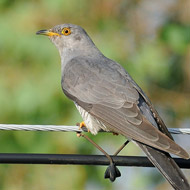
Report emphasises need for conservation action
England's much loved cuckoo and breeding birds such as curlews are under increasing threat from rising temperatures, according to a new report.
Research published by Natural England has revealed that whilst bees, wasps, ants and southern species such as the emperor dragonfly are likely to benefit from climate change, species further north and in the uplands will suffer.
The report is the largest and most comprehensive assessment of its kind ever undertaken in the country. Its results reflect that there are more species distributed in the south than there are in the north, giving greater scope for southerners to flourish from rising temperatures.
As a result, those at greater risk are species which are of high conservation concern, often found in the upland habitats such as twite, golden plover and mountain crowberry. In contrast, further population increases are likely for birds such as avocet and the little egret. The large wainscot and white line dart moths are also expected to benefit.
Commenting on the report, Andrew Sells, chairman of Natural England said: "Climate change is a huge challenge facing the natural world, which is changing before our eyes. This report for the first time gives us a clear sense of the scale of that impact over the coming decades, helping us to best focus our conservation efforts."
Dr Tim Hill, chief scientist for Natural England, added: "Our climate is changing fundamentally. There is already evidence of it affecting the habitat of some species, forcing them to live elsewhere. As temperatures rise, the consequences of future climate change for England’s wildlife are likely to be substantial, resulting in wholesale changes in the distribution of our wild animals and plants."
Natural England say the report emphasises the need for conservation action to increase our wildlife's stability to survive climate change:
"For species whose range will expand as a result of climate change, action is needed to enhance their habitat areas and the links between them to assist their movements. At the same time work is required to protect and create suitable habitat for colonisation where the climate is more suitable as well as to address other issues which may prevent them occupying newly suitable areas."
Image (C) Andy Li


 Companies marketing medicines for small pets exempt from authorisation must submit their annual return to the Veterinary Medicines Directorate (VMD) by 30 November 2026.



