


Highly contagious bee disease found in Scotland
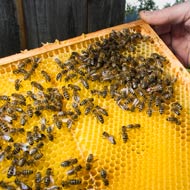
The outbreak presents no risk to public health and does not affect the quality or safety of honey. (stock photo)
An outbreak of the honeybee disease American foulbrood (AFB) has been confirmed in an apiary near Alyth, Perthshire.
The disease was confirmed on 15 July after laboratory analysis by Science and Advice for Scottish Agriculture (SASA). As there is no permitted treatment for AFB in the UK, the infected hives are being destroyed.
AFB is a notifiable disease affecting honeybees. Highly contagious and difficult to eradicate, it is caused by a spore-forming bacterium called Paenibacillus larvae. Spores enter the larva through consumption of contaminated food. The bacteria kills the bee larva by consuming body tissues.
According to the Scottish Government, the outbreak presents no risk to public health and does not affect the quality or safety of honey.
Movement of bees and related equipment in and out of the affected apiary are under specific controls. This includes enhanced biosecurity measures and increased vigilance.
Bee keepers are urged to be vigilant for signs of the disease and to maintain good husbandry. Any suspicions should be reported to beesmailbox@scotland.gsi.gov.uk.
Sunken cappings on cells are a typical sign of AFB. When uncapped, they reveal dead larvae in various states of decomposition. The 'ropiness test' can also be used as an indication; when the larvae is drawn out it strings out rather than snapping off as it should.
To assist the Scottish government bee inspectors with controlling the disease, bee keepers are asked to register on BeeBase - the national bee database - by visiting https://secure.fera.defra.gov.uk/beebase/public/register.cfm or sending their contact details to BeesMailbox@scotland.gsi.gov.uk.


 Companies marketing medicines for small pets exempt from authorisation must submit their annual return to the Veterinary Medicines Directorate (VMD) by 30 November 2026.



