


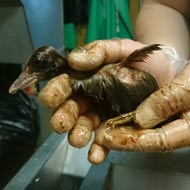
Family of birds are said to be recovering well
A family of ducklings were left stuck to the road last week as scorching temperatures melted the road they were trying to cross.
Passers-by found the five stranded ducklings on a tarmac road in Ashill, Norfolk, and took them to RSPCA East Winch for treatment.
The weather was so hot it started to melt the tarmac, so when the birds tried to cross they got covered in tar and became stuck.
Staff at East Winch wildlife centre used butter to loosen the tar on their feathers, followed by a bath in washing up liquid, then careful rinsing.
"All five ducklings were so poorly when they came in we weren’t sure they were going to make it," said centre manager Alison Charles. "They were absolutely covered in the thick, black muck and were very dehydrated.
"But we got to work quickly and started smothering them in the Lurpak butter to try to loosen the tar, before washing it off with washing up liquid and warm water.
"It might seem like an odd combination but the butter is an old fashioned remedy for removing tar and it really works. "Following this process with a warm washing-up liquid bath is really effective."
Three of the ducklings were so weak staff could only remove the worst of the tar. Once they are fitter, they will have another bath.
Alison said the birds are now "eating, drinking and chirping away in our orphans room quite happily."
The RSPCA is asking for donations of butter (not margarine) to help it cope with other cases of animals stuck in tar.
Image courtesy of the RSPCA


 Companies marketing medicines for small pets exempt from authorisation must submit their annual return to the Veterinary Medicines Directorate (VMD) by 30 November 2026.



