
Your data on MRCVSonline
The nature of the services provided by Vision Media means that we might obtain certain information about you.
Please read our Data Protection and Privacy Policy for details.

In addition, (with your consent) some parts of our website may store a 'cookie' in your browser for the purposes of
functionality or performance monitoring.
Click here to manage your settings.
If you would like to forward this story on to a friend, simply fill in the form below and click send.

Your friend's email:
Your email:
Your name:
 
 
Send Cancel

Isolated BSE case confirmed in Ireland
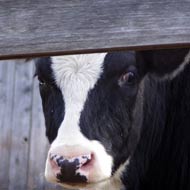
cow
This is Ireland's first case of BSE since 2013 and is likely to result in the loss of its 'negligible risk' status. (stock photo)
OIE expected to reassign 'controlled risk' status

Final test results have confirmed an isolated 'classical' case of bovine spongiform encephalopathy (BSE) in the Republic of Ireland.

It is Ireland's first case of BSE since 2013 and is likely to result in the loss of its 'negligible risk' status, which was granted only days before the suspected case was identified.

The World Organisation for Animal Health (OIE) is expected to reassign Ireland's 'controlled risk' status, which recognises the use of robust control systems, providing a basis for the safe trade in animals and products.

All animals potentially exposed to the BSE agent responsible for this one-off case have been identified, slaughtered, excluded from the food and feed chains, and tested. That is, animals born and reared on the birth-farm one year on either side of the birth date of the affected animal, and her progeny.

All 63 of these animals tested negative for BSE, as did the dam and grand-dam of the infected animals.

In addition, there are no concerns about the integrity of the commercial feed supply chain or the effectiveness of feed control systems.

According to the Department of Agriculture, Food and the Marine, the identification of classical cases of BSE after the ban on feeding meat and bone meal was implemented is not unprecedented. A falling number of these cases have been identified in Ireland and other countries over the years.

Become a member or log in to add this story to your CPD history

Equine Disease Surveillance report released for Q4 2025

News Story 1
 The latest Equine Disease Surveillance report has been released, with details on equine disease from Q4 of 2025.

The report, produced by Equine Infectious Disease Surveillance, includes advice on rule changes for equine influenza vaccination.

Statistics and maps detail recent outbreaks of equine herpes virus, equine influenza, equine strangles and equine grass sickness. A series of laboratory reports provides data on virology, bacteriology, parasitology and toxicosis.

This issue also features a case study of orthoflavivus-associated neurological disease in a horse in the UK. 

Click here for more...
News Shorts
RCVS annual renewal fee for vets due

RCVS' annual renewal fee for veterinary surgeons is now due. Vets must pay their renewal fee before Wednesday, 1 April 2026.

This year's standard annual fee has increased to 431 from last year's 418. This is an approximately three per cent increase, as approved by RCVS Council and the Privy Council.

Tshidi Gardner, RCVS treasurer, said: "The small fee increase will be used to help deliver both our everyday activities and our new ambitious Strategic Plan, which includes aims such as achieving new legislation, reviewing the Codes of Professional Conduct and supporting guidance, and continuing to support the professions through activities such as the Mind Matters Initiative, RCVS Academy and career development."

A full breakdown of the new fees is on the RCVS website. Information about tax relief is available on the UK government website.

