


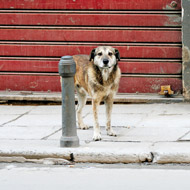
EU recognises homeless dogs and cats are not wild
The EU has agreed to recognise that stray cats and dogs should not be classified as 'wild'.
The decision follows a successful campaign by international animal welfare organisation FOUR PAWS and is being described as a 'huge step forward' for stray companion animals and animal welfare in general.
Since the first draft of the new Animal Health Law was released, FOUR PAWS has warned of the misuse of the term 'wild' when referring to stray animals.
The classification would have given them significantly lower legal protection than companion animals and could even have offered legal grounds for allowing hunters to shoot them.
Now, the European parliament, the EU council and the EU commission have agreed that, although the definitions of 'wild' and 'kept' will remain, a clause will be added stating that stray cats and dogs are not wild.
The new regulation will replace and include most of the present EU legislation on animal health.
It distinguishes between animals kept as pets, and those which are stray without an owner, attributing homeless cats and dogs a lower lever of legal protection than 'kept' ones. It was feared this could lead to legal grounds to kill strays.
By inserting the additional clause, a compromise has been found and the new draft explicitly distinguishes strays from the other non-kept animals.
Furthermore, the latest draft implements a clause for stray population management programmes - stating not only that they have to be performed in a humane way, but also that they have to be proportionate to the health risk posed by the population issue.
It will now also be a requirement for these programmes to be implemented in a transparent way, and to include consultations with an array of stakeholders to find the most suitable and effective solutions.


 Eligible members of BEVA will be able to vote for their Council team until Monday, 17 August 2026. Members will have received an election email on 17 July.



