


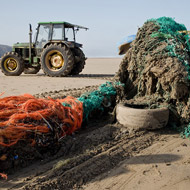
World Animal Protection promotes Sea Change week
World Animal Protection are running a dedicated Sea Change week (4-11 June) to highlight the devastating impact ghost fishing gear has on marine animals and the environment.
Ghost fishing gear refers to any fishing equipment or fishing related litter that has been lost, abandoned or discarded.
The majority of fishing gear is made out of plastic meaning that it can remain in oceans for centuries, accumulating year on year.
World Animal Protection estimates that over 136,000 whales, sea lions and seals are killed by ghost fishing every year and an 'unimaginable number' of birds, fish, turtles and other species are also injured or killed.
In the UK, seals, minke whales, seabirds and dolphins are at particular risk.
During Sea Change week, the charity is hoping that members of the public will help them track the presence of this gear right across the UK.
“We are dedicating a whole week to encouraging local beach users, coastal walkers, divers and ocean lovers to send us evidence of ghost fishing gear that is littering their local coastline," said World Animal Protection UK country director, Suzi Morris.
"We are hoping that those who are heading to the beach over Sea Change Week will take two minutes to look for any type of fishing litter, such as rope or netting, collect it, upload a quick photo to our website and then dispose of it safely in a bin.
"All of the photo uploads we receive will be used when meeting with Government and seafood companies to discuss the devastating impact of this problem on our environment.”
For more information visit www.worldanimalprotection.org.uk
Image (C) World Animal Protection


 Companies marketing medicines for small pets exempt from authorisation must submit their annual return to the Veterinary Medicines Directorate (VMD) by 30 November 2026.



