


Moving diagnosis from the lab to the field
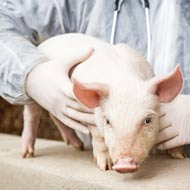
“Diagnostic tests in laboratories often take a couple of days to present results, by which stage disease is often set in and problems are therefore harder to treat."
Diagnostic technology for the field could be the key to speeding up disease identification, providing significant cost savings for the pig industry.
This was one of the key arguments put forward at BPEX's Innovation Conference this year.
Such technology is currently being trialled in the plant sector. Neil Boonham from Fera Science Ltd explained the importance of early disease detection in plants and how these strategies could be put to use in the pig industry.
“Diagnostic tests in laboratories often take a couple of days to present results, by which stage disease is often set in and problems are therefore harder to treat," he said.
"This is why early detection is so important. We need to be able to speed up disease identification to aid effective treatment."
A number of novel diagnostic technologies have been developed and trialled so far, with positive results, he added.
Among these are rapid testing lateral flow devices and loop-medicated isothermal amplification technology. Dr Boonham said these have proved able to make a diagnosis within 15 minutes or less and are simple and robust to use.
“With diagnostics slowly moving out of laboratories and into the field, I truly believe that both pig producers and plant growers will be able to reap the benefits sooner than we think.
“What’s really important is that the technologies trialled to date are quicker and not as costly as tests carried out in laboratories.”


 Companies marketing medicines for small pets exempt from authorisation must submit their annual return to the Veterinary Medicines Directorate (VMD) by 30 November 2026.



