


Circus bill absent from Queen's speech
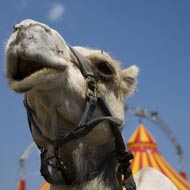
England lags behind numerous other countries where a ban is already in place, including Austria, Belgium, Bulgaria and Greece.
The future of a ban on wild animals in travelling circuses has been thrown into further doubt as it was absent from the Queen's 2015 speech.
Formally marking the start of the parliamentary year, the speech outlines the new government's agenda for the coming session, including proposed policies and legislation.
It is the fourth year running that the ban has been absent from the Queen's speech, since the government announced its intention to introduce a ban in 2012.
Commenting on the absence of the ban, the Born Free Foundation said it was "disappointed".
While the omission does not necessarily mean the ban will not be implemented, Born Free said including it in the speech would have been the "clearest sign yet that the Government planned to act on this important issue."
A draft bill published in April 2013 proposed to ban the use of wild animals in circuses in England by the end of 2015.
The charity has campaigned for a ban for some time, alongside the BVA, RSPCA and Captive Animals Protection Society. They argue that research shows the welfare needs of circus animals cannot feasibly be met in a travelling circus.
England lags behind numerous other countries where a ban is already in place, including Austria, Belgium, Bulgaria and Greece.
In March this year, The Independent reported that Conservative MP Andrew Rosindell lodged an objection to the Wild Animals in Circuses Bill. Under parliamentary rules relating to backbench bills, this concludes discussion.
Since the first attempt to debate the bill in September 2014, discussion has been blocked 12 times by a trio of Conservative backbenchers - Mr Rosindell, Philip Davies, MP for Shipley, and Christopher Chope, MP for Christchurch.
Responding to a question by Jim Fitzpatrick, the Labour MP who proposed the bill, George Eustice said: "We remain committed to banning the use of wild animals in circuses," but "we have run out of time this Parliament."


 Companies marketing medicines for small pets exempt from authorisation must submit their annual return to the Veterinary Medicines Directorate (VMD) by 30 November 2026.



