


UK amid countries highlighted worst for wildlife
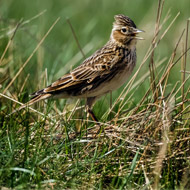
The skylark, once common on farmland, is now in decline.
The United Kingdom is one of the worst countries in the European Union for protecting wildlife, according to a report by the European Commission.
The state of nature in the EU report found that 70 per cent of habitats in Belgium, Denmark and the United Kingdom are in an unfavourable or bad condition.
The report is the first assessment to cover both the Birds and Habitats Directives. It results from the largest collaborative data-collection and assessment of nature ever undertaken across Member States.
The European Commission say that although targeted conservation actions have been a success, 'a much greater effort is required for the situation to improve significantly'.
Karmenu Vella, commissioner for environment, maritime affairs and fisheries, said: “This report is significant and timely. While it shows a mixed picture overall, it clearly demonstrates that efforts to improve vulnerable ecosystems can be highly effective. It also underlines the scale of the challenges that remain. We have to rise to those challenges, as the health of our nature is linked to the health of Europe's people, and to our economy.”
The report concludes that over 50 per cent of all wild bird species assessed have a secure status. However, around 17 per cent are still threatened, and another 15 per cent are near threatened or declining. This includes the skylark, which was once commonly found on farmland.
The report also examined other species protected under the Habitats Directive. Of these, 60 per cent were found to have an unfavourable status. The European Commission say that grasslands, wetlands, and dune habitats are of most concern.
Habitat types were found to show a worse conservation status and trend than species - only 16 per cent of habitat-assessments were found to be favourable.
The overwhelming majority of habitats were given an unfavourable status, with 47 per cent of the assessments being inadequate and 30 per cent noted as bad. Agricultural practices (such as over-grazing) and human-induced 'modifications of natural conditions' were identified as the main threats.


 Companies marketing medicines for small pets exempt from authorisation must submit their annual return to the Veterinary Medicines Directorate (VMD) by 30 November 2026.



