


Pandas can't efficiently digest bamboo, study finds
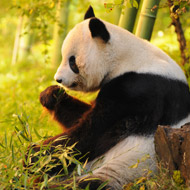
"The giant panda’s gut microbiota may not have well adapted to its unique diet, and places pandas at an evolutionary dilemma."
The giant panda's gut bacteria cannot efficiently digest bamboo, a study by Chinese researchers has found.
The study, published in the American Society for Microbiology, reveals that the giant panda has a carnivore-like gut microbiota, predominated by bacteria such as Escherichia/Shigella and Streptococcus.
Zhihe Zhang, director of the Chengdu Research Base of Giant Panda Breeding and lead author of the study, said: "Unlike other plant-eating animals that have successfully evolved, anatomically specialised digestive systems to efficiently deconstruct fibrous plant matter, the giant panda still retains a gastrointestinal tract typical of carnivores.
“The animals also do not have the genes for plant-digesting enzymes in their own genome. This combined scenario may have increased their risk for extinction.”
Study co-author Xiaoyan Pang adds: “This result is unexpected and quite interesting, because it implies the giant panda’s gut microbiota may not have well adapted to its unique diet, and places pandas at an evolutionary dilemma.”
Giant pandas began to eat bamboo exclusively around two million years ago. Before this they ate both plants and meat.
The animals spend about 14 hours a day consuming up to 12.5kg of bamboo leaves and stems, but can only digest about 17 per cent of it. Researchers have been intrigued as to how pandas digest bamboo fibre and extract nutrients from it.
The scientists took fecal samples from 45 giant pandas living in Zhang's Research Base. They found that, despite their diet, giant pandas have extremely low gut microbiota diversity and an overall structure that differs from non-panda plant-eaters, but was similar to carnivorous and omnivorous bears.
The giant panda gut did not contain plant-degrading bacteria such as Ruminococcaceae and Bacteroides that are typically found in other herbivores, but instead was predominated by Escherichia/Shigella and Streptococcus.
The research team are now planning a follow-up study to more fully understand the function of the panda's gut microbiota on the animal's nutrition and health.


 Companies marketing medicines for small pets exempt from authorisation must submit their annual return to the Veterinary Medicines Directorate (VMD) by 30 November 2026.



