


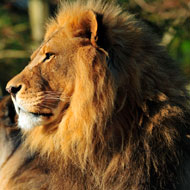
Minister says the ban impacted people's livelihoods
Zambia has lifted a ban on hunting lions and leopards in game parks, claiming it has impacted wildlife resources and the livelihoods of local people. Critics, however, have branded the move "outrageous".
Jean Kapata, the state's minister of tourism and arts, was quoted in the Zambia Daily Mail saying: "I am lifting the ban on the following conditions: the guidelines are drafted into a statutory instrument so that they become part of the wildlife law.
"Lion hunting should only resume in the 2016/2017 hunting season and not this year. Leopard hunting can resume this year 2015/2016 season, but with very cautionary quotas."
The hunting of lions and other cats was banned in Zambia on 10 January, 2013 as a result of declining lion populations caused by over-harvesting, hunting of underage lions and depletion of lion habitats.
Kapata said profits from safari hunting could benefit the livelihoods of rural communities, which were greatly affected by the ban.
Kapata said: "Government’s move to ban the hunting of lion and other cats on January 10, 2013 had a good basis with a background of weak regulatory mechanisms."
Based on new information and advice given, the government will use prescribed guidelines to regulate cat hunting in the state, she added. "Some of the regulatory methods are currently being used in Tanzania, Mozambique and Zimbabwe. These have been found to be effective."
However, the decision was branded "outrageous" by Peter Sinkamba, president of the Green Party of Zambia, who is quoted by The Guardian as saying: "This type of approach is definitely awful. Posterity will judge our generation harshly for having been responsible for depletions of rhinos, black lechwes and other species."


 Companies marketing medicines for small pets exempt from authorisation must submit their annual return to the Veterinary Medicines Directorate (VMD) by 30 November 2026.



