


Lynx return: 'serious consideration' needed
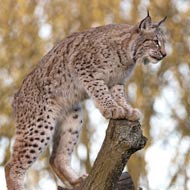
Natural England would have to approve any application to reintroduce lynx into the wild.
Any possible release of Eurasian lynx in the UK would need 'very serious consideration', Natural England has said in a statement.
The Lynx UK Trust recently revealed that it hopes to carry out a trial reintroduction of the species, which has been absent from Britain for around 1,300 years.
Earlier this week, the trust revealed the results of a public survey, which showed 91 per cent of those who took part supported the reintroduction of lynx in the UK.
As the appropriate licensing body in England, Natural England would have to approve any application to reintroduce lynx into the wild.
'Any application to introduce lynx into England would need very serious consideration in terms of its impact right across the UK.
'If such an application were made, Natural England would consider it in line with prevailing legislation; international guidelines; following proper public consultation and evidence gathering, and taking into account any input from Government.'
Lynx UK Trust hope to reintroduce the species to sites in Norfolk, Cumbria, Northamptonshire and Aberdeenshire. It is still exploring possible sites for a Welsh reintroduction. Up to six lynx would be fitted with a satellite collar and released at each site. They would then be monitored for three-five years.
The team believe the trial reintroduction could offer a natural solution to deer overpopulation in the UK, regenerating forests and boosting the ecosystem.
However, the National Farmers Union opposes the scheme, believing efforts and funds should be put towards retaining current biodiversity.
Countryside adviser Claire Robinson said: "Lynx have not been in this country for hundreds of years. The environment has changed drastically in that time. We do not know how lynx would behave in the current environment, how they would source their food and what habitat they would use."
So far, Lynx UK Trust's legal advisers have had a preliminary meeting with Natural England to discuss the process of application. The team are continuing to engage in public consultations and education programs, alongside preparing a formal application.


 Companies marketing medicines for small pets exempt from authorisation must submit their annual return to the Veterinary Medicines Directorate (VMD) by 30 November 2026.



