


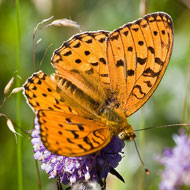
High brown fritillary butterfly numbers rise by 180 per cent
One of the UK's rarest butterflies has enjoyed its best season for 10 years, with numbers rising by more than 180 per cent.
The high brown fritillary butterfly once bred in most large woods in England and Wales, but habitat loss has pushed it close to extinction. It is now one of only two critically endangered butterflies in the UK.
Efforts to restore the butterfly's habitat, coupled with last year's warm spring weather, has brought a welcome boost to the species.
According to a survey by the UK Butterfly Monitoring Scheme (UKBMS), the striking orange and black butterfly saw a 180 per cent boost in numbers last year compared to 2013.
Dr Tom Brereton, head of monitoring at Butterfly Conservation, who led the survey, said: "It is fantastic news that numbers are at their highest level for more than a decade.
"A huge amount of work co-ordinated by Butterfly Conservation has been put into conserving this butterfly in recent years, especially though wildlife-friendly farming schemes, so the results will come as a welcome boost to all involved."
A number of other butterflies enjoyed a boost thanks to last year's warmer-than-average spring, including the marbled white, ringlet and brimstone - all of which had their best years since 1976.
August last year, however, was colder and wetter than average, meaning the butterfly season peaked slightly earlier in July. Some species fell in numbers as a result, for example the small white and large white.
Despite positive news for the high brown fritillary, Dr Brereton said there is still a long way to go to reverse the long-term decline of the species.


 Companies marketing medicines for small pets exempt from authorisation must submit their annual return to the Veterinary Medicines Directorate (VMD) by 30 November 2026.



