


Creatures grew up to two meters in length and lived in lakes and rivers
A species of crocodile-like amphibian that lived during the rise of the dinosaurs was among Earth's top predators more than 200 million years ago, a study led by the University of Edinburgh has revealed.
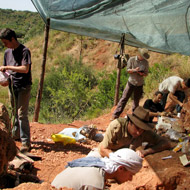
A team of palaeontologists identified the prehistoric species - Metoposarus algarvensis - after excavating bones at the site of an ancient lake in Southern Portugal.
A distant relative of the salamander, the team say that the species was part of a wider group of primitive amphibians that were widespread around 220-230 million years ago.
The creatures grew up to two meters in length and lived in lakes and rivers during the late Triassic Period, living much like crocodiles do today and feeding mainly on fish.
Dr Steve Brusatte, who led the study, said: "This new amphibian looks like something out of a bad monster movie. It was as long as a small car and had hundreds of sharp teeth in its big flat head, which kind of looks like a toilet seat when the jaws snap shut.
"It was the type of fierce predator that the very first dinosaurs had to put up with if they strayed too close to the water, long before the glory days of T. rex and Brachiosaurus."
Dr Richard Butler, from the School of Geography, Earth and Environmental Sciences at the University of Birmingham, said: "Most modern amphibians are pretty tiny and harmless. But back in the Triassic these giant predators would have made lakes and rivers pretty scary places to be."
The new species was discovered in a large bed of bones where it is thought up to several hundred of the creatures died when the lake they inhibited dried-up.
Only four square meters of the site has been excavated so far, and the team is continuing work there in the hope of uncovering new fossils.
The study has been published in The Journal of Vertebrate Paleontology.
Image (C) University of Edinburgh


 Companies marketing medicines for small pets exempt from authorisation must submit their annual return to the Veterinary Medicines Directorate (VMD) by 30 November 2026.



