


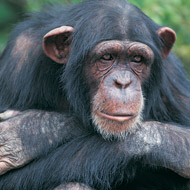
Humans exposing chimps in Tanzania to deadly parasite
Human disease poses a risk to the chimpanzee population, according to a study led by researchers from Emory University in Atlanta.
The study found that humans are exposing chimps in Tanzania's Gombe Stream National Park to a parasite called Cryptosporidium (Crypto), which could be contributing to their decline.
"It appears to be a case of spillover, or exchange of pathogen, from humans to animals, instead of the other way around," said Michele Parsons, a PhD student in Emory University's Department of Environmental Sciences and Environmental Health.
"The spillover of any one pathogen between species, is an indicator that an ecological connection exists, with potential for other pathogens to emerge," she added.
Crypto is one of the most frequent causes of waterborne disease in the United States, and is among the top four cases of moderate-to-severe diarrheal disease in young children in developing nations.
The disease is particularly dangerous for people infected with HIV, who tend to have more severe cases that can be fatal. Studies have also shown that chimpanzees infected with SIV (the ancestor of HIV) have a reduced lifespan and may be more vulnerable to opportunistic infections.
The research team collected faecal samples from a cross-section of chimpanzees, baboons, and humans, as well as domesticated dogs, sheep and goats within the greater Gombe ecosystem. The results revealed Crypto infection rates of about 16 per cent in the wild primates, four per cent in humans, and 10 per cent in the goats and sheep.
DNA sequencing showed a complex epidemiology for Crypto in this system, with humans, baboons and a subset of chimpanzees infected with C. hominis (which is most closely associated with humans).
"The dominance of C. hominus among humans and non-human primates suggests cross-species contamination," the study authors say.
The baboons are known to raid human homes for food, while the chimpanzees raid agricultural fields just outside the park boundaries. These behaviours expose the wild primates to the potentially contaminated faeces of livestock or exposed human sewage.
The researchers say that the findings highlight the complex nature of zoonotic parasite transmission and stress the need for further studies.
Michele adds: "It's important to understand the ecology of diseases for both wildlife conservation and for human health. We need good baseline data in order to monitor emerging pathogens."
The study, Epidemiology and Molecular Characterization of Cryptosporidium spp. in Humans, Wild Primates, and Domesticated Animals in the Greater Gombe Ecosystem, Tanzania, by Michele B. Parsons et al is published in Plos Neglected Tropical Diseases.


 Companies marketing medicines for small pets exempt from authorisation must submit their annual return to the Veterinary Medicines Directorate (VMD) by 30 November 2026.



