


Scientists create TB-resistant cows
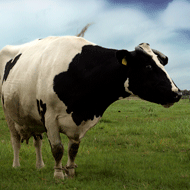
Scientists used a gene editing tool to insert a mouse gene into the genome of cattle.
Scientists in China have managed to develop 13 genetically-modified cows that are resistant to TB infection.
Using a gene editing tool called TALEN, scientists from the Chinese Ministry of Agriculture were able to insert the mouse gene SP110 - which was already believed to offer protection against TB - into the genome of Holstein-Friesian cattle.
In total, 23 transgenic cattle were produced and 13 of these survived into adulthood. According to the research paper published in Proceedings of the National Academy of Sciences (PNAS), these cattle showed increased resistance to bovine TB.
Mycobacterium bovis was introduced into the lungs of three transgenic cows and three control cows, which were killed 16 weeks after infection. Scientists then examined the lung, lymph nodes, spleen and liver for lesions.
One of the three transgenic cows was found to have no sign of lesions and the two transgenic cows that were infected were found to have a significantly reduced bacterial load in the organs.
A further transmission study found that out of nine transgenic cows, six showed no sign of TB infection and the three with lesions again showed minimal damage to the lung and lymph nodes, compared to the control group.
Commenting on the research, Professor Heiner Niemann, head of the Institute of Farm Animal Genetics in Germany told The Guardian: "These findings are another step towards the creation of disease-resistant livestock animals based on advanced genetic tools."


 Companies marketing medicines for small pets exempt from authorisation must submit their annual return to the Veterinary Medicines Directorate (VMD) by 30 November 2026.



