


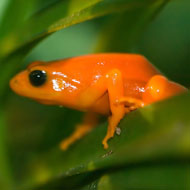
Disease may pose a worrying threat to the country's biodiversity
Chytrid fungus has been found in Madagascar for the first time, according to research published in the journal Scientific Reports.
Amphibian chytridiomycosis is an emerging infectious disease that has played a significant role in the unprecedented declines seen in amphibian populations globally. It is caused by the fungus Batrachochytrium dendrobatidis (Bd).
While the disease is said to be the biggest threat facing biodiversity worldwide, Madagascar was previously thought to be free of the pathogen.
However, researchers say they have provided the first evidence for widespread Bd in the country's wild amphibian populations.
The team have documented surveys undertaken between 2005 and 2014, showing the first record of Bd in 2010. Since then, it has been detected in multiple areas, according to their findings.
It is thought Bd could have arrived in the country recently, which is a concern for conservationists as it "could pose significant threats to Madagascar's unique 'megadiverse' amphibians."
Speaking to BBC News, one of the report's authors, Goncalo Rosa from the Zoological Society of London, said: "If these findings represent endemic chytrid, it means it has been there forever, coexisting with these frogs.
"But if we are talking about a recent introduction, this is really worrying because we've seen what has happened in other places. And if frogs in Madagascar have never existed with the fungus, it could be catastrophic - this could cause huge biodiversity loss."
Madagascar is the site of extraordinary amphibian diversity, housing a considerable number of the world's 7,300 known amphibian species. It harbours more than 290 described species and well over 200 undescribed frog species.
The full research paper can be viewed here: http://www.nature.com/doifinder/10.1038/srep08633
Image: Wikipedia/Jean-Louis Vandevivère/CC BY 2.0


 Companies marketing medicines for small pets exempt from authorisation must submit their annual return to the Veterinary Medicines Directorate (VMD) by 30 November 2026.



