


WWF release rare video of tigers in China
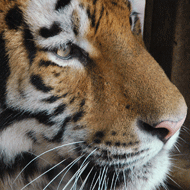
The new footage is the result of decades of conservation work aimed at establishing a breeding Amur tiger population in China.
Footage of a family of tiger cubs has been captured by a WWF camera trap, in what is the first video evidence of Amur tigers in China.
The tigers were filmed playing 20 miles from the Russian border late in 2014. Before the footage was captured, footprints were the only indicators of this species of tiger in the country.
Because tiger cubs would be not be able to travel such a distance by themselves, the WWF say that they must have been raised in China.
Wang Fuyou, division head of the Wangqing Nature Reserve conservation department, said: "These images show that Wangqing Nature Reserve has now become a breeding site for Amur tigers. Seeing these positive outcomes from our efforts greatly strengthens our confidence that wild Amur tiger populations can be restored."
Also known as Siberian tigers, Amur tigers were once common in northern China, the Russian Far East and the Korean peninsula. Sadly, by the 1940s they had been driven to near extinction - no more than 40 individuals remained in the wild.
The subspecies was saved when Russia became the first country in the world to grant the tiger full protection. By the 1980s, the Amur tiger population had increased to around 450. Those individuals now reside in far-east Russia, and at least 18-30 adults have been spotted in the border areas of China and North Korea.
WWF say that the new footage is the result of decades of conservation work aimed at establishing a breeding Amur tiger population in China.
WWF's Amur Tiger Conservation plan designated the Wangqing-Hunchun-Saiyang-Dongning Area as a priority zone for wild tiger conservation in 2010.
To view the video visit https://vimeo.com/120081659


 Companies marketing medicines for small pets exempt from authorisation must submit their annual return to the Veterinary Medicines Directorate (VMD) by 30 November 2026.



