


Farm Bird Count: Early results 'remarkable'
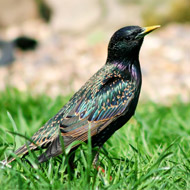
Starlings were among the rare birds spotted during the count.
Early results from the 2015 Big Farmland Bird Count have revealed sightings of several types of rare bird.
The farmers taking part have already recorded seeing 117 different species, 14 of which are considered 'at risk'. These include the yellowhammer, starling, lapwing and linnet. Blackbirds have been recorded on 92 per cent of farms taking part in the survey so far.
Jim Egan, who is head of training and development at the Game & Wildlife Conservation Trust (GWCT), said: "At this early stage in the count this was a remarkable result both in terms of the range of species counted as well as the number of red-listed species appearing within the top 25 of birds seen."
Over 2,000 farmers and gamekeepers have registered to take part on the Big Farmland Bird Count, organised by the GWCT. The survey began on the 7 February and will run until the 15 February, to see how their conservation efforts are helping some of our most rapidly declining birds.
Guy Smith, Vice-Chairman of the National Farmers Union, who was one of the first farmers to submit his count to the GWCT, said: "The GWCT’s Big Farmland Bird Count was a wonderful opportunity to take some time out on my farm and appreciate how my conservation efforts are helping my birds.
“It was thrilling to see flocks of lapwing and in total I was surprised to record more than 24 different bird species including curlew, barn owls and even a heron. I often hear farmers grumble that while they are quietly proud of how much wildlife they have on their farms they get fed up with reports that modern farming is bad for birds. But to my mind the answer is, don't just be proud - be loud. We're always interested in how many tonnes of wheat we can get to the hectare, now let's systematically record how many bird species we can achieve per farm and send the results back to the GWCT.”
As well as monitoring the effect of conservation schemes on the farms, organisers say that participating in the GWCT's Big Farmland Bird Count is a very satisfying way for people to discover the wide variety of bird species that live there.
Jim Egan said, “The result of spending just a short time monitoring your birds can be surprising. We hope it will spur people on to do even more work for their farmland birds in the future. As a research charity, we also feel it is important for farmers to build up their own long-term data records. This will give them personal insight on what their efforts are achieving against a backdrop of profitable farming businesses.”
Full results of the 2015 Big Farmland Bird Count will be announced in the spring. To register you interest and to download count forms, visit www.gwct.org.uk/BFBC.


 Companies marketing medicines for small pets exempt from authorisation must submit their annual return to the Veterinary Medicines Directorate (VMD) by 30 November 2026.



