


Australian land mammals in rapid decline
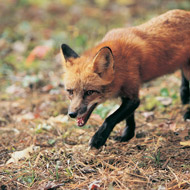
The European red fox is thought to be behind the rapid decline of Australia's land mammals.
Australia's native land mammals are in rapid decline and the feral cat and the European red fox are largely to blame, according to a study published in the Proceedings of the National Academy of Science.
In the last 200 years, 10 of Australia's land mammals have disappeared - a rate of extinction which is much greater than previously recognised.
A further 21 per cent of Australian endemic land mammal species are now assessed to be threatened, indicating that the rate of loss (one to two extinctions per decade) is likely to continue.
The researchers say that much of the loss has been in areas that are remote from human population centres.
Lead author of the study, John Woinarski, said: "In contrast to general patterns of extinction on other continents, where the main cause is habitat loss, hunting and impacts of human development, the loss of Australian land mammals is likely due to predation by introduced species, particularly the feral cat and the European red fox."
It is believed that many of the now extinct animals went unnoticed because they were small, nocturnal, shy, and lived away from human settlement.
"The apparent naturalness and extent of the Australian outback has beguiled the public into thinking that Australia's unique biodiversity was and is secure," Woinarski added.
It is thought that this complacency may now change, as the decline of high profile mammal species, such as the koala and platypus, becomes increasingly apparent.
The researchers believe that success and recovery is possible, however say that it is a "formidable challenge".
Practical measures to protect the native mammal species include translocating the threatened species to islands on which feral predators have never been introduced or have been eradicated.
However, the researchers say that even more pressing that practical management is a sense of societal affinity for biodiversity.
They warn that Australians need to recognise and take responsibility for their wildlife, otherwise future extinctions may be viewed as inconsequential.
Furthermore, they stress, if these high rates of extinction are condoned in Australia, "there may be little hope for the world's biodiversity more generally."


 Companies marketing medicines for small pets exempt from authorisation must submit their annual return to the Veterinary Medicines Directorate (VMD) by 30 November 2026.



