


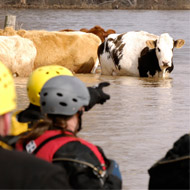
North Wales Fire and Rescue Authority currently faces cuts of up to £3.3m
Firefighters in North Wales will stop rescuing large animals in distress from April as they no longer have the funds for it.
The North Wales Fire and Rescue Authority (NWFR) currently faces cuts of up to £3.3m over the next five years and plans to scrap this "non statutory" service in an attempt to protect its core service.
A recent Freedom of Information request by the Daily Post revealed that in the last two years, NWFR crews were called to more than 60 incidents across North Wales involving animals.
The incidents included a group of horses stuck in quick sand, a cow stuck in a ditch and a lamb that had fallen down a cliff.
In a statement the chair of North Wales Fire and Rescue Authority, Councillor Meirick Davies, said: “It is undoubtedly a challenging time for all public services as we are faced by diminishing budgets. It is important to view recent decisions made by the Fire Authority in the context of being faced with a potential shortfall in the budget for the next five years in the region of up to £3.3 million, which could threaten our core fire and rescue services.
“At the Authority’s December meeting, it was decided by members that we should aim to maintain the current level of service in the 2015-16 budget, with the help of a minimum increase in the levy provided by local councils.
“Whilst regrettable and certainly not a decision that was taken lightly, members voted to reduce some of the non-statutory services provided by the fire and rescue service, namely related to rope and large animal rescues, to avoid any reduction in core services.
“Some of these services which will no longer be provided are already duplicated by alternative providers with skills in this type of rescue work."
North Wales Fire and Rescue say that they are currently in the process of putting into effect an awareness raising campaign in readiness for the changes that will come into effect on April 1. They hope that the campaign will raise awareness amongst the public and will minimise any confusion and risk.
Image (C) Jocelyn Augustino/FEMA


 Companies marketing medicines for small pets exempt from authorisation must submit their annual return to the Veterinary Medicines Directorate (VMD) by 30 November 2026.



