


Human pollution to blame for high infection levels
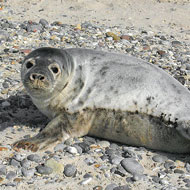
For the first time, scientists have detected high levels of Campylobacter in grey seals. What's more, research findings suggest human pollution is responsible for transmitting the bacterium to wildlife.
Led by the Moredun Research Institute in Edinburgh, scientists studied grey seal pups on the Isle of May, an island in the Firth of Forth, Scotland. Samples were taken from live seals and those that had died in the wild. In total, half of the newborns and juveniles tested positive for Campylobacter jejuni.
The research team say 79 per cent of these cases were attributable to human or agricultural pollution that had contaminated the water - for example sewage and waste from farming and livestock.
Co-author Samuel Sheppard, from Swansea University, said: "Large numbers of grey seals were infected with Campylobacter types that are commonly associated with human infection, not the species that are usually isolated from marine mammals.
"The infected seals also showed symptoms consistent with gastro-enteritis – comparable to that in humans. This is striking as it shows that this important human pathogen may be spreading to vulnerable wildlife species where its disease potential is unknown."
Lead researcher Dr Johanna Baily said the findings "raise concerns" about environmental pollution and the spread of pathogens from humans to wildlife species.
The Isle of May is home to one of the largest seal colonies along the east coast. While the study concentrated on Scottish seals, Professor Sheppard said: "it is likely that seals off the coast of Wales, and across the UK, would be similarly affected. More research is needed to find out the scale of the problem."
Campylobacter is the most common cause of bacterial gastroenteritis in humans. In the UK each year, there are more than 500,000 cases, 20,000 hospitalisations and 110 deaths.
The study has been published in the January edition of Molecular Ecology.
Image: CC BY 2.5/Wikimedia Commons/Andreas Trepte/www.photo-natur.de


 Companies marketing medicines for small pets exempt from authorisation must submit their annual return to the Veterinary Medicines Directorate (VMD) by 30 November 2026.



