


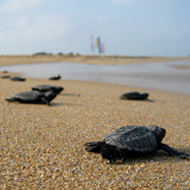
Sea turtles seek out unique magnetic signatures along the coast
Research by the University of North Carolina has revealed that adult sea turtles find their way back to beaches where they hatched by seeking out unique magnetic signatures along the coast.
The study provides evidence that turtles imprint on the unique magnetic field of their natal beach as hatchlings and then use this information to return as adults.
Whilst previous studies have shown that sea turtles use the Earth's magnetic field as a guide while out at sea, it has remained unclear whether adult turtles also depend on magnetic features to recognise and return to the nesting sites chosen by their mothers before them.
In their study, J.M Brothers and Kenneth Lowman analysed a 19-year database of loggerhead nesting along the eastern coast of Florida - the largest sea turtle rookery in North America. They found a strong association between the spatial distribution between the spatial distribution of turtle nests and subtle shifts in the Earth's magnetic field.
In some times and places, the Earth's field shifted so that the magnetic signatures of adjacent locations along the beach moved closer together. When this happened, nesting turtles packed themselves in along a shorter stretch of coastline.
In places where magnetic signatures diverged, sea turtles spread out and laid their eggs in nests that were fewer and farther between.
Sea turtles go to great lengths to find the places where they began life because successful nesting requires a combination of environmental features that are rare: the right temperature, soft sand, and an easily accessible beach with few predators.
Brothers said: “The only way a female turtle can be sure that she is nesting in a place favourable for egg development is to nest on the same beach where she hatched. The logic of sea turtles seems to be that ‘if it worked for me, it should work for my offspring.’"
Image (C) Hila Shaked


 Companies marketing medicines for small pets exempt from authorisation must submit their annual return to the Veterinary Medicines Directorate (VMD) by 30 November 2026.



