


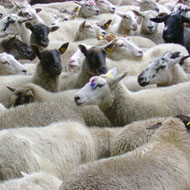
Parasites becoming increasingly resistant to the drugs
A group of scientists have been awarded almost three million pounds to tackle drug resistance in livestock parasites.
All species of grazing livestock can be infected by gastrointestinal parasites and can affect their health and welfare. However, parasites are becoming increasingly resistant to the drugs, anthelmintics, which are used to treat the infection.
The funding from the BBSRC Strategic Longer and Larger Grant (sLoLa) to the team based in the University of Glasgow's Institute of Biodiversity, Animal Health and Comparative Medicine, will help tackle the problem of anthelmintic resistance.
Their project, The BUG Consortium: Building Upon the Genome: using H. contortus genomic resources to develop novel interventions to control endemic GI parasite, was one of only five sLoLas awarded in 2014.
Professor Eileen Devaney, who leads the UK-wide team of scientists, said: “This project brings together an excellent team of researchers to address an important problem in food security.
“It builds upon the long held reputation of the University of Glasgow in veterinary research, recognised in the recent Research Excellence Framework as having the highest quality research of any Vet School in the UK, and parasitology in particular.
"It will allow scientists in the Institute with expertise in modelling and population genomics to work alongside those studying parasite genomes and mechanisms of drug resistance.”
The project will encompass significant consultation with the farming community and guidance from an external Advisory Panel, comprising stakeholders and experts in the field.


 Companies marketing medicines for small pets exempt from authorisation must submit their annual return to the Veterinary Medicines Directorate (VMD) by 30 November 2026.



