


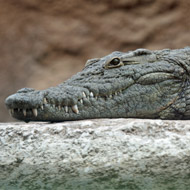
Crocodiles have longer fibres in the limb muscles
A study into why alligators do not appear to use galloping gaits, while the anatomically similar crocodile does, has been carried out by a team of researchers at the Royal Veterinary College.
Led by members of the Structure and Motion Lab, the research was conducted on the limbs of both crocodiles and alligators to ascertain why there is a difference in their behaviour and movement.
Specimens from six different species of alligator and crocodile were examined. The team analysed how the muscles were structured within the limb and the internal arrangement of fibres within the muscles.
The team discovered that, as a rule, crocodiles have longer fibres in the limb muscles, which offer more rotation and range in the limb. However, the cross section of fibres within the muscles of alligators was bigger than crocodiles, indicating greater force could be generated.
The discovery indicates that the range of movement is significant in enabling crocodiles to gallop, while the larger cross section of fibres in alligator limbs could explain their more explosive, forceful movement.
Comparative architectural properties of limb muscles in Crocodylidae and Alligatoridae and their relevance to divergent use of asymmetrical gaits in extant Crocodylia, has been published in the Journal of Anatomy 225: 569-582
Image (C) Leigh Bedford


 Companies marketing medicines for small pets exempt from authorisation must submit their annual return to the Veterinary Medicines Directorate (VMD) by 30 November 2026.



