


Birds fled while the storm was still 250-560 miles away
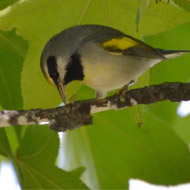
A population of gold-winged warblers "evacuated" their nesting site one day before the April 2014 tornado outbreak in the US, UC Berkeley scientists have revealed.
Whilst tracking a population of golden-winged warblers a research team, led by UC Berkley ecologist Henry Streby, discovered that birds in the mountains of eastern Tennessee fled their breeding ground one to two days ahead of the arrival of powerful storms. The storms swept through the central and southern United States in April, generating 84 tornadoes and killing 35 people.
“It is the first time we’ve documented this type of storm avoidance behaviour in birds during breeding season." Streby said.
"We know that birds can alter their route to avoid things during regular migration, but it hadn’t been shown until our study that they would leave once the migration is over and they’d established their breeding territory to escape severe weather,
“The warblers in our study flew at least 1,500 kilometers (932 miles) total to avoid a severe weather system. They then came right back home after the storm passed.”
The researchers say that the birds fled while the storm was still 250-560 miles away, and local environment cues to stormy weather, such as temperature, atmospheric pressure and wind speed, were largely absent.
Streby added: “At the same time that meteorologists on the Weather Channel were telling us this storm was headed in our direction, the birds were apparently already packing their bags and evacuating the area.”
The "evacuation migration" of the gold-winged warblers is published in the journal Current Biology.
Image (C) Andy Reago


 A nationwide roadshow offering free, personalised parasite risk assessments and flea and tick checks will be visiting popular dog events across the UK.



