


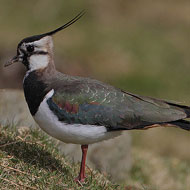
RSPB reports a record breeding year for troubled species
Lapwings have enjoyed a record breeding season, giving conservationists hope for the future of this troubled species.
Many RSPB sites say they have seen a successful breeding season this year. Great Bells Farm in Kent attracted 25 breeding pairs, raising 26 chicks - the number conservationists had hoped for.
RSPB recently finished converting the low-quality farmland at Great Bells to a freshwater nature reserve.
Lapwings have a "red status" in the UK as they are declining at a concerning pace. Numbers have been falling in lowland England since the mid-19th century. In recent years, the species has been threatened by changes in agricultural land use.
Martin Harper, the RSPB's director of conservation said: "In my lifetime the lapwing has gone from a widespread countryside bird to one increasingly confined to nature reserves. It’s challenging to manage land for lapwing, so seeing an increase this year is especially welcome.
"It gives us hope that this engaging species may in time be able to turn a corner as a nesting bird in lowland England, especially if land managers can be encouraged to get the most from wildlife-friendly farming payments."
Lapwings are waders; long-legged birds that typically feed in wet grassland or at water's edge. They are known as "peewits" due to their distinctive call.
Image: Wikimedia Commons/Steve Garvie/CC-BY-2.0


 Companies marketing medicines for small pets exempt from authorisation must submit their annual return to the Veterinary Medicines Directorate (VMD) by 30 November 2026.



