


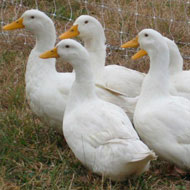
First UK case of the H5 strain confirmed since 2008
Defra has confirmed a bird flu outbreak on a duck breeding farm in Yorkshire. Initial testing has confirmed the H5 strain of bird flu which has not been reported in the UK since 2008.
Health officials have ruled out the possibility of the H5N1 strain that is infectious for humans. The outbreak was confirmed on Sunday afternoon and is said to present a very low risk to human health.
All 6,000 birds on the farm are being culled and a 10km restriction zone has been imposed to prevent further spread of the infection.
Restriction zones ban the movement of poultry, products and waste from the affected area. Poultry must be isolated within the zone, fairs, shows and exhibitions are prohibited and game birds must not be released.
Investigations are underway to see if the outbreak is linked with recent cases in Germany and the Netherlands. Further test results are expected this week.
Certain strains of bird flu can pass to humans, though cases are rare and infection usually requires close contact with infected birds.
As new strains of the avian influenza virus emerge frequently, there is a risk one of these strains may be able to spread from human to human. However, there is currently no evidence to suggest a recent strain of bird flu can transmit between people.
According to advice from the Food Standards Agency, it is safe to eat poultry and poultry products such as eggs, assuming they are properly cooked.
Image ©Katie Chodil/Wikipedia CC-BY-2.0


 Companies marketing medicines for small pets exempt from authorisation must submit their annual return to the Veterinary Medicines Directorate (VMD) by 30 November 2026.



