
Your data on MRCVSonline
The nature of the services provided by Vision Media means that we might obtain certain information about you.
Please read our Data Protection and Privacy Policy for details.

In addition, (with your consent) some parts of our website may store a 'cookie' in your browser for the purposes of
functionality or performance monitoring.
Click here to manage your settings.
If you would like to forward this story on to a friend, simply fill in the form below and click send.

Your friend's email:
Your email:
Your name:
 
 
Send Cancel

Drug added to pet food may extend lifespan
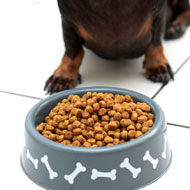
dog with bowl of food
Low doses of rapamycin can extend life and delay age-related diseases in mice.

Researchers may be able to delay age-related disease in dogs and humans

US scientists say a drug added to pet food may be able to extend dogs' lives by two to five years. It is hoped their research may also have implications for human medicine, reducing the prevalence of age-related heart problems, cancer and other illnesses.

Led by Matt Kaeberlein and Daniel Promislow, researchers from the University of Washington (UW) are embarking on a five-year study titled the Dog Ageing Project.

In a two-part trial, low doses of the anti-rejection drug rapamycin, which is used in human medicine, will be added to the diets of middle age pet dogs (aged six to nine depending on breed).

Before, during and after the trials, researchers will monitor age-related factors such as heart function, immune function, activity levels, body weight and cognitive functions. The dogs will be tracked throughout their lives to determine the impact on lifespan and health.

Previous research indicates that low doses of rapamycin has the ability to extend life and delay age-related diseases in mice and other organisms.

High doses of the drug are used in human patients to prevent the rejection of organ transplants and to fight cancer. Washington researchers say that in middle-age mice, providing low doses in the diet delay age-related heart dysfunction, cancer, immune decline and cognitive decline.

Scientists believe the drug could increase healthy lifespan in dogs by two to five years or more, as well as improving cardiac and immune function and delaying, or reducing the risk of, cancer.

Similar studies in humans can take decades, but it is hoped that in less than 10 years, the UW team can uncover key factors that may help pets stay healthy for longer.

To find out more about the research, visit
dogagingproject.com or www.uwhealthyaging.org/#!dog-aging/c13h0.

Become a member or log in to add this story to your CPD history

Vets launch new podcast for pet owners

News Story 1
 Two independent vets have launched a podcast to help owners strengthen their bond with pets. Dr Maggie Roberts and Dr Vanessa Howie, who have worked in both veterinary practice and major charities, are keen to use their experience to enable people to give pets a better life.

The venture, called Vets Talking Pets, provides advice and information on a range of topics, including how to select a suitable pet, where to obtain them and how to get the best out of your vet. Maggie and Vanessa will also discuss sensitive subjects, including end-of-life care, raw food diets and the cost of veterinary care.

The podcast can be found on all the usual podcast sites, including Podbean, Apple, Amazon Music and YouTube. 

Click here for more...
News Shorts
RCVS Regional Question Time heads to Edinburgh

The RCVS is to bring its Regional Question Time (RQT) to Edinburgh for 2026.

The event will take place at Novotel Edinburgh Park in Edinburgh on Wednesday, 20 May 2026.

It will begin with supper and drinks at 6.30pm, with an evening programme from 7.30pm. This will start with an update on RCVS' activities, followed by questions and answers with representatives.

RCVS is encouraging an 'open dialogue', in which queries can be raised in a friendly, informal environment.

While discussions are expected to be audience-led, the RQT is expected address major issues including the VSA, the CMA's remedy package and the VN Vision project.

Tim Parkin, RCVS president, said: "It's an important time for the professions, and I'm looking forward to meeting colleagues in Scotland as we navigate this period of change together so we can come out stronger."

Tickets can be booked here.


