


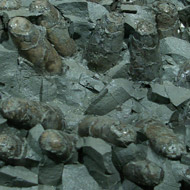
Bird eggs over 250 million years old differ significantly from modern day bird eggs
Egg shape may explain how some birds survived the asteroid that wiped out the dinosaurs, new research suggests.
Researchers at the University of Lincoln examined eggshell geometry from the transition of theropods - a sub-order of the Saurischian dinosaurs - into birds, based on fossil records and studies of living species.
The results suggest the early birds from the Mesozoic era (over 250 million years ago) laid eggs that had different shapes to those of modern birds. The researchers say that this could suggest that egg physiology and embryonic development was different in the earliest birds, and may have implications for how some birds survived the asteroid event which led to the extinction of dinosaurs.
Lead author of the study, Dr Charles Deeming, explains: “These results indicate that egg shape can be used to distinguish between different types of egg-laying vertebrates. More importantly they suggest Mesozoic bird eggs differ significantly from modern day bird eggs, but more recently extinct Cenozoic birds do not. This suggests that the range of egg shapes in modern birds had already been attained in the Cenozoic.”
The origin of eggs which can survive out of water (amniotic) is one of the key adaptions underpinning vertebrates' transition from sea to land over 300 million years ago. Modern amniotic eggs vary considerably in size and shape and it is believed that this variety may reflect the different patterns of egg formation and development in these taxa.
Dr Deeming added: "From a biological perspective, it is self-evident that different egg shapes by birds both past and present might be associated with different nesting behaviours or incubation methods. However, hardly any research has been carried out on this topic and fossil data are insufficient to draw firm conclusions. We hope that future discoveries of associated fossil eggs and skeletons will help refine the general conclusions of this work."
'Egg shape changes at the theropod-bird transition, and a morphometeric study of amniote eggs' by D. Charles Deeming and Marcello Ruta is published in Royal Society Open Science.
Image (C) Charles Deeming/University of Lincoln


 Companies marketing medicines for small pets exempt from authorisation must submit their annual return to the Veterinary Medicines Directorate (VMD) by 30 November 2026.



