


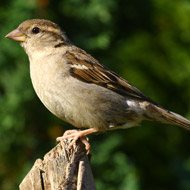
Majority of losses are from the most common species
A study by the University of Exeter has revealed a startling decline in European birds, with the majority of losses being from the most common species.
Researchers from the University of Essex, together with with the RSPB and the Pan-European Common Bird Monitoring Scheme (PECBMS) studied European bird populations over the past 30 years. The investigation revealed that during that period, there was a decrease of 421 million individual birds. Around 90 per cent of the losses were from the 36 most common and widespread species including house sparrows, skylarks, grey partridges and starlings.
The University of Exeter say that the study highlights the need for greater efforts to halt the continent-wide declines of our most familiar countryside birds.
Richard Inger from the Environment and Sustainability Institute at the University of Exeter said: "It is very worrying that the most common species of bird are declining rapidly because it is this group of birds that people benefit from the most."
"It is becoming increasingly clear that interacting with the natural world and wildlife is central to human wellbeing and significant loss of common birds could be quite detrimental to human society."
Despite the decline in common birds, the study also revealed that numbers of some less common birds have risen. Robins, great tits, blue tits and blackbirds were all shown to be on the increase. Populations of rarer species, including ravens, marsh harriers, buzzard and stone curlews have also risen in recent years - most likely the result of direct conservation action and legal protection in Europe.
Richard Gregory from the RSPB's Centre for Conservation Science said: “The rarer birds in this study, whose populations are increasing, have benefitted from protection across Europe. For example, white storks and marsh harriers receive among the highest level of protection in the EU - this is why their numbers have increased. The conservation and legal protection of all birds and their habitats in tandem are essential to reverse declines.
"This is a warning from birds though out Europe. It is clear that the way we are managing the environment is unsustainable for many of our most familiar species."
Conservation efforts tend to be focused on rarer species but this latest research suggests that conservationalists should also address issues affecting common birds, for example those traditionally associated with farmland.
The study is published in Ecology Letters
Image (C) David Friel


 Companies marketing medicines for small pets exempt from authorisation must submit their annual return to the Veterinary Medicines Directorate (VMD) by 30 November 2026.



