


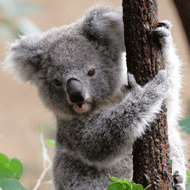
Scientists report world's first successful trial involving wild koalas
Australian scientists have carried out the world's first successful trial of a vaccine against chlamydia in koala bears.
Microbiologists from the University of Sunshine Coast (USC) in Queensland have spent five years leading the research. In previous studies, the team trialled the vaccine on captive koalas, but for the past year they have been testing its effects in wild animals.
Sixty koalas were captured from their natural habitat in the Moreton Bay region north of Brisbane. Half were vaccinated, while the remaining thirty were left unvaccinated as a control group. Each koala was fitted with a radio tag for monitoring purposes.
Professor Timms, who led the research, said the results were "very promising". The vaccinated koalas showed good immune responses and lower levels of chlamydia infection than the unvaccinated group.
“This large trial has confirmed that the vaccine is safe to give to not only captive koalas, but also koalas in the wild,” he said.
However, the trial will continue for at least another year. The team hope to show the vaccine's positive impacts on disease and female reproductivity, as well as infection.
Professor Timms also hopes to assess the vaccine's impact on other koala populations facing the threat of chlamydial disease, but this will require further funding.
“We feel compelled to start using this vaccine more broadly, especially when we know that it is safe and has some definite positive benefit to the animals,” he said.
“But a project of this size and cost requires a large team of people, including veterinarians and field teams, in addition to the laboratory aspects.”
The Queensland Government provided funding of $358,000 to the trial. State environment minister Andrew Powell said: “Chlamydia is one of the major threats to our koala populations and that’s why we’ve invested significant funds into combating this disease.
“Among other things, chlamydia in koalas can lead to blindness and infertility, so it’s clear why we need to support research that can stem these conditions.”
A special fund has been set up for those wishing to offer donations to the project: http://www.usc.edu.au/community/giving-to-usc/giving-opportunities/koala-research-project
To watch a video of the researchers discussing their work, visit: http://www.youtube.com/watch?v=yrfbHfO76e0&feature=youtu.be


 Companies marketing medicines for small pets exempt from authorisation must submit their annual return to the Veterinary Medicines Directorate (VMD) by 30 November 2026.



