


'Big cheeses' under fire at BCVA Congress
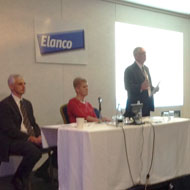
Several speakers from the floor who are in general practice said that they had received the benefits of EMS
In response to a question on the evidence for the efficacy of badger vaccination, CVO for Wales, Christianne Glossop, said that there was not at this point in time. Deputy CVO for England, Alick Simmons agreed with this point of view but emphasised that despite the cost implications there could be advantages in using it as an additional tool in the control programme even though controlled trials are difficult to carry out.
Comments from the floor included why not focus the limited budget on vaccines for cattle rather than focusing on vaccinating badgers at the cost of £600 per badger? Should there not be more work on diagnosis of TB in badgers?
Former BCVA president, Andy Biggs, asked for a reality check on the actual efficacy of vaccination in cattle and its consequences in a herd, before raising the expectations of farmers. The BCVA endorses this position and is drawing attention to the hurdles that have yet to be tackled and the extended time frame involved in developing a vaccine for cattle.
A question was raised as to whether vet schools should contribute to the funding of EMS providers. In his answer, Professor Gary England, dean of Nottingham vet school pointed out that EMS is a requirement of the RCVS and that vet schools have no budget for this activity. Professor Stuart Reid, president of the RCVS, concurred with this view. However, he said there was a basic question about whether EMS was of any use from a regulatory point of view, especially as the RCVS accepts veterinary graduates from countries where EMS is not a part of student education.
Several speakers from the floor who are in general practice said that they had received the benefits of EMS and that there was an onus on members of the profession to give something back. There was, however, a need to 'filter' students so that those who are destined ultimately for small animal practice don't waste large animal practitioners' time.
A delegate asked whether now that BSE and cJD have effectively been eradicated, shouldn't the Government be spending valuable resources on something more useful? Alick Simmons said that it was probably too soon to relax our guard, especially as one case has been reported during the past week. Christianne Glossop added that it is difficult to know when the end of the long tail of an epidemic has been reached.
Other questions covered the subjects of the UK's competence in controlling endemic disease and the importance of educating new vets on the complexities of disease control in the 'real life' scenario of veterinary agricultural practice. The panel agreed that it was vital to take a global approach and for all the stakeholders to be involved in a coherent and co-ordinated way.
This led to a question about whether it is wise to devolve responsibility for animal health matters on a national basis; for instance, in the case of BVD virus infection. It was emphasised that this was a consequence of political decisions and that the best answer was to make the most of the resources already in place and to share best practice.


 Companies marketing medicines for small pets exempt from authorisation must submit their annual return to the Veterinary Medicines Directorate (VMD) by 30 November 2026.



