


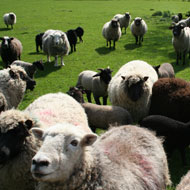
Move away from traditional stratified crossbreeding
Findings from Britain's latest sheep breed survey show a move away from traditional "stratified crossbreeding", in favour of lowland breeding.
A report on the breeding structure of the British sheep industry was published yesterday (October 8) by EBLEX, the organisation for beef and lamb levy payers in England.
Commenting on the findings, EBLEX's beef and sheep scientist Poppy Frater, said: "Over the past 40 years, the quest to develop the perfect sheep breed has resulted in a very dynamic sheep industry in Great Britain.
"The results of the latest sheep breed survey are a testament to the resilience of the industry as it continually evolves to adapt to external change, while remaining focused on producing what the market wants."
Key findings included:
- There are 106 different sheep breeds in Britain, an increase on figures from the previous survey
- Crossbred ewes outnumbered purebred ewes
- Ewe numbers declined in three main hill breeds - Scottish blackface, Swaledale and Welsh mountain
- North country mules were found on a fifth of farms
- Breeds that inclined in number included Texel, Lleyn, blue faced Leicester and composite easy care. Many breeds declined and several that were seen in the previous survey were not found.
The survey was completed by just under 10,000 wool producers registered with the British Wool Marketing Board. It is the fifth survey to be carried out since 1975.
Data was analysed and the report written by Geoff Pollott from the Royal Veterinary College. The findings shine a light on the popularity of different breeds and the way the sheep industry has evolved.
The report explores the ways in which environmental, political and economical influences shape the structure of the UK's sheep industry. The report aims to help organisations such as EBLEX to target their research to meet the needs of the industry. It will also improve breed societies' understanding of the impact their breeds have on the sheep industry.
To view the full report, visit: http://www.eblex.org.uk/publications/corporate-publications/


 Companies marketing medicines for small pets exempt from authorisation must submit their annual return to the Veterinary Medicines Directorate (VMD) by 30 November 2026.



