


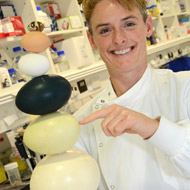
Research may even hold clues to the causes of cancer
Emu and chicken eggs are helping scientists at the University of Edinburgh understand how genes can go wrong and cause birth defects.
Researchers from the university's Roslin Institute say their findings may even offer clues to the causes of cancer. The eggs are being used to investigate how genes control the way our bodies grow and develop.
Genetic mutations responsible for causing the formation of extra fingers in chickens are similar to those in humans, according to the findings. The condition, called polydactyly, is the most common defect in new-born babies.
The team have discovered that a single gene, called Sonic Hedgehog, is essential to ensuring that our fingers and toes develop in the correct places. This mechanism applies to all animals with digits, including birds.
By examining chickens with too many fingers and toes, researchers can figure out how the gene is controlled and what happens when it goes wrong.
Researchers also found that emus have just one finger because only a small part of the Sonic Hedeghog gene is active during development.
Because this gene has been linked to some cancers, understanding it better may offer hope for new treatments.
Dr Megan Davey from the Roslin Institute, said: “Chicken eggs have been used for years to investigate how embryos grow because they develop outside of the mother so it is easy to see what is going on. Rather than putting all our eggs in one basket, studying different types of birds gives us a deeper understanding of how our genes build bodies.”
The team will showcase their research at the Easter Bush Campus Open Day on Saturday, October 4 as part of the Midlothian Science Festival.
Image (C) The Roslin Institute


 Companies marketing medicines for small pets exempt from authorisation must submit their annual return to the Veterinary Medicines Directorate (VMD) by 30 November 2026.



