


Changes are recommended after study finds increase in other scavengers at sites
How vulture 'restaurants' - sites set up in South Africa to provide safe feeding areas for the threatened birds - are organised may have to change following new research that shows other scavengers are taking advantage of the supply of carrion, with possible negative side effects.
Vulture populations are currently declining worldwide due to multiple threats, including poisoning and reduced availability of food. Vulture restaurants are supplementary feeding sites which are used as a conservation method to provide the birds with a source of uncontaminated meat.
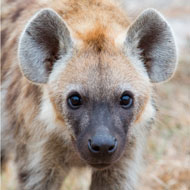
However a six year study, led by scientists at Nottingham Trent University's School of Animal, Rural and Environmental Sciences, has shown the number of mammalian scavengers, including brown hyena and black-backed jackals, increased significantly when carrion - carcasses of domestic livestock or wildlife such as antelope - was left at fixed locations for the vultures.
There are concerns that this could lead to effects such as an increased risk of the spread of diseases such as rabies, as more animals come into contact with one another around the food source, and that an unusually large number of carnivores at these feeding sites could mean problems for nearby livestock and game ranch managers.
The study looked at two sites in South Africa’s North West Province – the Mankwe Wildlife Reserve (MWR), which includes a vulture restaurant, and the nearby Pilanesberg National Park (PNP) that doesn’t.
Researchers carried out faecal scat surveys at each site as a way of monitoring hyaena and jackal numbers and found that the abundance of scats for both species increased at MWR following supplementary feeding - by more than 54 times for hyenas and more than six times for jackals. By comparison, there were only minor fluctuations in abundance at PNP, which is just 6km away.
Dr Richard Yarnell, lead researcher and expert in biodiversity conservation at Nottingham Trent University, said the findings suggested the increase in scats were linked to the provision of supplementary carrion at the vulture restaurant.
"Given the ability of opportunistic scavengers such as jackals to suppress local populations of prey, and their potential to spread disease, we urge further assessment of the impacts of establishing vulture restaurants at fixed locations.
"If providing supplementary carrion for vultures continues, we recommend that fences are erected around vulture restaurants to exclude scavengers. We also believe that the most effective and appropriate method of providing carrion would be to irregularly deposit carcasses of varying types and sizes at random locations, simulating a naturally-occurring food source."


 Companies marketing medicines for small pets exempt from authorisation must submit their annual return to the Veterinary Medicines Directorate (VMD) by 30 November 2026.



