


Fatal aggression in chimps is "natural"
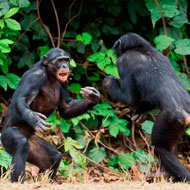
Primatologists have long been divided over the root of intergroup aggression.
Lethal aggression among chimpanzees is not due to human interference, but a result of natural competition, according to a major new study.
Primatologists have long been divided over the root of this behaviour. Some have argued it is down to intervention by humans, for example artificial feeding or habitat destruction.
According to new findings published in the journal Nature, however, it appears these killings are part of the chimp's natural behavioural repertoire and occur regardless of human intervention.
Co-author Ian Gilby from the Arizona State University (ASU), said: "This study debunks the idea that lethal aggression among wild chimpanzees is an aberrant behaviour caused by human disturbances, like artificial feeding or habitat loss."
More than 30 scientists collaborated on the research, which involved compiling data from 18 chimps and four bonobo communities spanning five decades. The study is the first ever attempt to determine whether killing is a result of human impact or an evolved strategy to improve access to territory, food and mates.
After studying 152 killings, scientists concluded the behaviour is natural, occurring regardless of humans.
Bonobo monkeys, however, were not observed killing other bonobos, whatever the level of human intervention.
ASU scientist Joan Silk wrote a companion piece for the research in Nature. In it she says perceptions of primate behaviour, particularly chimps, is distorted, so that “morally desirable features, such as empathy and altruism, have deep evolutionary roots, whereas undesirable features, such as group-level violence and sexual coercion, do not.”
However the data shows "there are some circumstances in which the benefits of lethal aggression exceed the costs for chimpanzees, nothing more."
Find the full research on Nature: http://www.nature.com/nature/journal/v513/n7518/full/nature13727.html


 Companies marketing medicines for small pets exempt from authorisation must submit their annual return to the Veterinary Medicines Directorate (VMD) by 30 November 2026.



