


Horse healthcare survey receives outstanding response
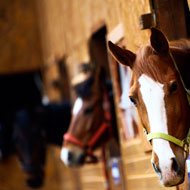
Over 7,000 horse owners and non-veterinarian service providers completed the online survey this year.
A survey coordinated by BEVA to discover more about the use of non-veterinarian procedures in equine healthcare, has received an outstanding response from the equine industry. Over 7,000 horse owners and non-veterinarian service providers completed the online survey this year, as part of Defra's Review of Minor Procedures (RMPR) project.
The anonymous survey was directed at musculoskeletal and dental care practitioners, as well as horse owners to discover more about why, when and how non-veterinarians are used for equine healthcare services. Together with representative associations, approximately 6,000 horse owners, 600 individual musculoskeletal practitioners, and 400 equine dental care providers took part. BEVA say that the results will provide a framework to help determine how equine healthcare services undertaken by non-vets should be managed in future, in order to best protect the health and welfare of horses in the UK.
There has been an increasing concern over recent years that the number of individuals offering equine healthcare services, and the range of those services, has expanded without there being any system for making sure that the standards of care offered are what owners expect and horses deserve. BEVA say that current regulations were drawn up decades ago - before many of today's services were routinely available - and there is now an opportunity to review whether of not the current controls are fit for purpose.
The chief executive of BEVA, David Mountford, said: “The results will paint a clearer picture of how healthcare is currently provided for horses in the UK, which groups and individuals carry out these services and what the horse owners’ perceptions are in relation to qualifications and regulations. The next steps will be to consider how the system could be improved to best protect the health and welfare of horses."
The full results of the survey should be available by the end of the year.


 Companies marketing medicines for small pets exempt from authorisation must submit their annual return to the Veterinary Medicines Directorate (VMD) by 30 November 2026.



