
Your data on MRCVSonline
The nature of the services provided by Vision Media means that we might obtain certain information about you.
Please read our Data Protection and Privacy Policy for details.

In addition, (with your consent) some parts of our website may store a 'cookie' in your browser for the purposes of
functionality or performance monitoring.
Click here to manage your settings.
If you would like to forward this story on to a friend, simply fill in the form below and click send.

Your friend's email:
Your email:
Your name:
 
 
Send Cancel

Goldfish surgery goes swimmingly
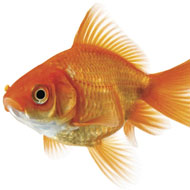
goldfish
The surgery is said to have extended George's life by 20 years. (file photo)
Australian vet operates to remove fish tumour

An Australian vet has performed surgery to remove a tumour from a goldfish.

The operation went swimmingly, according to Dr Tristan Rich from the Lort Smith Animal Hospital in North Melbourne, and George the goldfish has now been returned to his loving owner.

BBC News reported that George's owner paid $200 (£125) for the surgery, which has extended the goldfish's life by 20 years.

To perform the surgery, Dr Rich, who is head of the hospital's exotic and wildlife vet team, ran a tube from a bucket of oxygenated water containing a maintenance level of anaesthetic into George's mouth so the water washed over his gills.

Due to the size of the tumour, Dr Rich said he had to use a gelatine sponge to control the bleeding during surgery and the size of the wound made it difficult to seal. Dr Rich put in four sutures and sealed the rest with tissue glue.

After being moved to the recovery unit, where he was given oxygen and long acting pain relief and antibiotics, George began breathing on his own and swimming.

Become a member or log in to add this story to your CPD history

Equine Disease Surveillance report released for Q4 2025

News Story 1
 The latest Equine Disease Surveillance report has been released, with details on equine disease from Q4 of 2025.

The report, produced by Equine Infectious Disease Surveillance, includes advice on rule changes for equine influenza vaccination.

Statistics and maps detail recent outbreaks of equine herpes virus, equine influenza, equine strangles and equine grass sickness. A series of laboratory reports provides data on virology, bacteriology, parasitology and toxicosis.

This issue also features a case study of orthoflavivus-associated neurological disease in a horse in the UK. 

Click here for more...
News Shorts
RCVS annual renewal fee for vets due

RCVS' annual renewal fee for veterinary surgeons is now due. Vets must pay their renewal fee before Wednesday, 1 April 2026.

This year's standard annual fee has increased to 431 from last year's 418. This is an approximately three per cent increase, as approved by RCVS Council and the Privy Council.

Tshidi Gardner, RCVS treasurer, said: "The small fee increase will be used to help deliver both our everyday activities and our new ambitious Strategic Plan, which includes aims such as achieving new legislation, reviewing the Codes of Professional Conduct and supporting guidance, and continuing to support the professions through activities such as the Mind Matters Initiative, RCVS Academy and career development."

A full breakdown of the new fees is on the RCVS website. Information about tax relief is available on the UK government website.

