


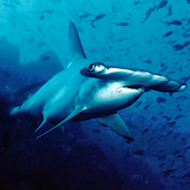
New CITES rules will give sharks and manta rays a better chance of surviving in the wild
From September 14, 2014, new rules state that the international trade in specimens of five shark species and all manta ray species - including their fins, gills and meat - must be accompanied by certificates and permits confirming that they have been harvested both legally and sustainability.
The new controls, adopted by the Convention on International Trade in Endangered Species of Wild Fauna and Flora (CITES), will apply to the scalloped hammerhead shark, oceanic whitetip shark, smooth hammerhead shark, great hammerhead shark, porbeagle shark and manta rays.
Sharks and manta rays are consumed in many parts of the world. Fish and chip meals are often made from shark meat in Europe and, in parts of Asia, shark fin soup is served at weddings and banquets. It is hoped that these new controls will give sharks and manta rays a better chance of surviving in the wild.
Mr John E. Scanlon, the CITES secretary-general, said: "Regulating international trade in these shark and manta ray species is critical to their survival and is a very tangible way of helping to protect the biodiversity of our oceans. The practical implementation of these listings will involve issues such as determining sustainable export elves, verifying legality, and identifying the fins, gills and meat that are in trade. This may seem challenging, but by working together we can do it and we will do it."
Mr Arni M.Mathiesen, of the Food and Agriculture Organisation of the United Nations (FAO), commented: "FAO will continue its effort and work closely with CITES on immediate actions in support of the implementation of CITES listings of sharks and manta rays, including the provision of legal assistance for fishery legislation, support to the development and implementation of National Plans of Action for sharks and rays and activities on traceability."


 Companies marketing medicines for small pets exempt from authorisation must submit their annual return to the Veterinary Medicines Directorate (VMD) by 30 November 2026.



