


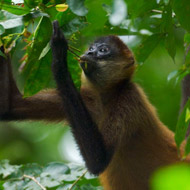
Call for donations to help fund the removal of animals from circuses across Peru
Ahead of International Primate Day (September 1), Animal Defenders International (ADI) is launching an appeal to help monkeys which have been rescued from the circus and pet trade in Peru.
International Primate Day, which was established in 2005 by ADI, aims to highlight the threats to primates from their use in research and entertainment, and for the pet and meat trade.
A few days ago, the ADI rescue team rescued a spider monkey who was living on his own in a circus in Peru - an awful situation for any animal, but particularly traumatising for this social and intelligent species, which would normally be found living wild in the rainforest.
The spider monkey, named Pepe, had his canine teeth snapped off - leaving him with just stumps. According to ADI, this is a predicament that many primates in captivity have to face.
Pepe was brought back to safety as part of ADI's Operation Spirit of Freedom rescue mission, during which the organisation is helping authorities to enforce its ban on wild animals in circuses. The legislation was brought into effect after a major campaign by ADI, which exposed the terrible suffering of circus animals in the country.
When Pepe arrived at the rescue centre, ADI founders Jan Creamer and Tim Phillips cut him free of the collar and chain that had been strung around his neck during all the time he had been with the circus.
Jan Creamer, president of the ADI, said: “Despite the terrible suffering he had endured in the circus, Pepe behaved with a quiet dignity that was deeply moving. It was an honour to cut away the chain that had held him captive, and to hold his hands as we did so, his gaze meeting ours.”
ADI cares for primates and other wild animals rescued from circuses in Peru at a specially built rescue centre. At the centre they are looked after until a permanent home is found for them. The native animals and primates are re-homed in Peru, while non-native animals and lions are airlifted to a sanctuary in the USA.
ADI is appealing for members of the public to help fund the removal of animals from circuses across Peru, to their relocation to sanctuaries where they can live out the rest of their lives in peace. Donations can be made at: http://bit.ly/1mmWA1H
Image (C) Arturo de Fras Marques


 Companies marketing medicines for small pets exempt from authorisation must submit their annual return to the Veterinary Medicines Directorate (VMD) by 30 November 2026.



